There’s a slightly awkward paradox in loyalty marketing.
Imagine being in a relationship for twenty years, only to watch your partner roll out the red carpet every time they meet someone new. Flowers. Discounts. Special treatment.
And you? Thanks for sticking around.
For years, telecom has had its own version of this dynamic. The most attractive deals have often been designed to convince people to switch, while customers who have quietly stayed for five, ten or twenty years haven't necessarily felt the same love.
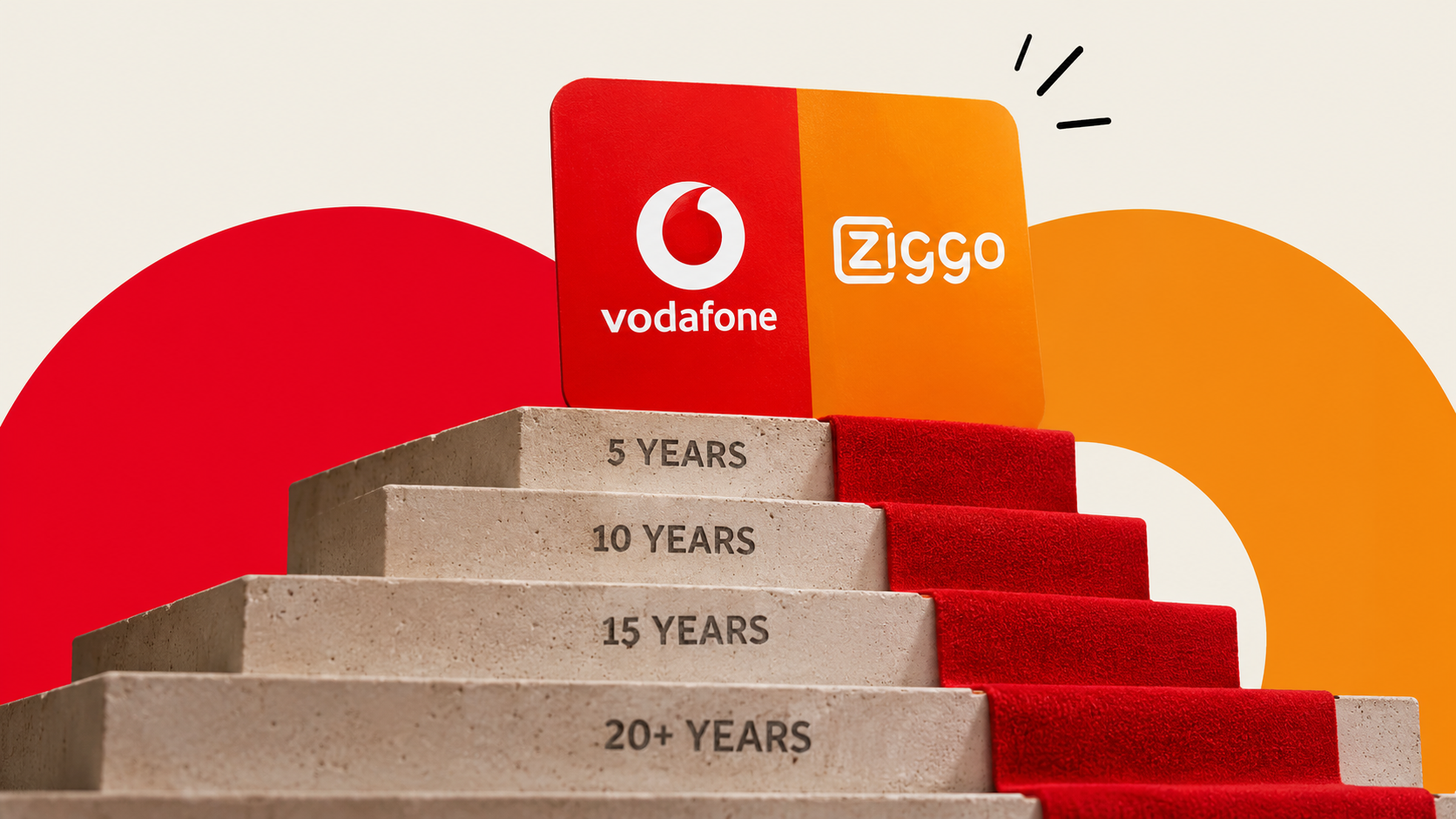
Vodafone Ziggo’s renewed Priority program challenges that logic with one very simple idea: The longer you stay, the more you get.
And behind that simple sentence is a bigger idea about what loyalty marketing can be.
What if staying is the behaviour worth rewarding?
We’ve become very good at designing loyalty mechanics.
Buy this, earn that. Collect ten points. Unlock the next level. Complete a challenge. Spend a little more and something special might happen. There’s nothing inherently wrong with that. These mechanics can create genuine engagement and give customers compelling reasons to return.
But there’s an interesting question hiding underneath them:
Why should customers always have to do something more to prove that they’re loyal?
Someone who has chosen the same provider for fifteen years has already demonstrated a pretty significant behaviour. They stayed.
With the renewed Priority program, Vodafone Ziggo makes that behaviour count. The years customers have spent with them automatically determine the benefits they receive.
The customer doesn’t need to manufacture loyalty for the program, which in turn makes the relationship transactional.
From rewarding transactions to recognising relationships
That distinction matters.
Traditional loyalty mechanics often work as an exchange: do something valuable for us, and we’ll give you something valuable in return.
But recognition works differently. It starts with what the customer has already given you: their time, their trust, their repeated decision not to leave. And sometimes, feeling noticed is exactly what turns a reward into loyalty.
The growth opportunity that’s already on your customer list
There’s another reason this move is interesting. When businesses talk about growth, the conversation has a habit of drifting toward acquisition.
Who’s next? The next lead. The next conversion. The next customer. But some of the most valuable growth opportunities aren’t waiting somewhere outside the business. They’re already paying an invoice every month.
Retention, deeper engagement and stronger customer relationships are growth too (read more on the importance of CLV). And that makes an important question for loyalty marketers:
How much energy are we spending convincing people to come in, versus giving people reasons to stay?
The answer doesn’t have to mean choosing one over the other. Acquisition and retention need each other. But when one outweighs the other, customers notice.
The renewed Priority program isn’t interesting because it proves that points or gamification don’t work. They absolutely can. It’s interesting because it reminds us to start one step earlier. Before asking how to reward loyalty, ask what loyalty actually looks like in your customer relationship. Before asking customers to prove their loyalty, make sure you’re proving that you value it.